Showing posts with label J-School. Show all posts

Activists Call for Action at Don't Spy on Us Anti-Surveillance Campaign

It's been one year since Edward Snowden revealed the US scheme of global monitoring. Campaigners in London came together to discuss government surveillance and people's rights to privacy.


Reporter: Phoebe Yu
Camera and Editing: Phoebe Yu and Rosanne Roobeek
Script: Phoebe Yu

Headlines

A roundup of the day's headlines on June 10, 2014 for City News International, City University London International Journalism Program's news production.


Presenter & Script: Phoebe Yu

Women Walk for Water on Women's Day

Radio piece for International Women's Day. Care International launched a new campaign to raise awareness for women and girls who have no access to safe water.

Cue: How far do you have to walk to get water? A new campaign was launched to help women get access to safe water.

Listen on SoundCloud

Londoners React to Indian Elections Outcome

The recently elected Prime Minister Narendra Modi is a polarizing figure that faces both strong support and criticism. Londoners express their views on PM Modi and his Hindu nationalist Bharatiya Janata Party.


Reporter and Camera: Phoebe Yu
Editing: Phoebe Yu and Rosanne Roobeek
Script: Phoebe Yu

Google Cloud Platform Launches Aggressive Marketing Strategy

Radio piece on Google's new changes to its cloud computing service.

Cue: Google launches its new cloud computing strategy in a full-day summit in San Francisco with price reductions and new product features. Our reporter Phoebe Yu went to Google headquarters in London to get the story.

Future of Human Enhancement Technology

Radio piece on the future of human enhancement technology. Featuring an interview with Frank Swain from BBC Future's Hack My Hearing. Twitter feeds sound credit to the Listening Machine.

Cue: What would five hundred Twitter feeds sound like? A sound technician working on better hearing aids has found a way to transmit Twitter activity into audio. The idea of hearing invisible worlds was presented at a technology conference in London.

Listen on SoundCloud

Southeast England Continues to Battle Floods While Flood-Hacking Underway

Filmed in Staines on February 2014 during one of England's worst winter floods.


Reporter: Rosanne Roobeek
Camera and editing: Phoebe Yu and Rosanne Roobeek
Script: Phoebe Yu

Londoners Pressuring Sochi Olympic Sponsors

Filmed before the start of the Sochi Games, when London protesters participated in a global campaign to pressure Olympic sponsors to take action against Russia's anti-gay laws.


Reporter: Rosanne Roobeek
Camera and editing: Phoebe Yu and Rosanne Roobeek
Script: Phoebe Yu

British Party Leader Predicts UK Outcome in European Elections

Assignment for International Correspondent Specialism: write a story out of a press briefing as an international correspondent from your home country. 

Farage's speech to the Foreign Press Association (Video: Phoebe Yu) 
 
A small, populist, conservative party might oust the long-standing Conservative Party in the next European Parliament elections in May 2014.  It might seem like Canada in the late 1990s, when Preston Manning’s former Reform Party overtook the Progressive Conservatives as the official opposition.  But this time, the country in question is the United Kingdom, and the parties involved are the rising UK Independence Party (Ukip) and the Conservative Party.

Nigel Farage, leader of Ukip, predicted how well the UK’s three main parties will fare in the Euro elections during a press briefing to foreign journalists.

In a speech outlining the importance of this year’s Euro elections and the implications it will have for Britain, Farage suggested that the Liberal Democrats would fare the worst, the Conservatives would come in third, with Labour and Ukip competing to take the most seats.

Farage said the Lib Dems are in danger of facing a “wipe out,” with opinion poll ratings hovering from eight to nine percent.

And the Conservatives, who have never slipped past second place in UK general elections, could come out third in the Euro elections, suggested Farage.

“The prospects…would indicate that the Conservatives are going to come third in these European elections,” said Farage.

But the Ukip leader conceded that Labour is ahead of the polls, though not without questioning the accuracy of the polls in question. 

Farage sees a Labour victory or loss to be a reflection of the population’s views for a referendum on Britain’s EU membership.  Ukip aims to withdraw from the European Union, and will call for a referendum on this issue should it gain enough support.

“If Labour wins, that will be seen to be an endorsement of the Miliband position, mainly, that they are not going to match the Conservative promise of a referendum.  But if Labour don’t win, and if Ukip are able to overhaul Labour, then I think there will be enormous demand for the Labour party to match the promise [of a referendum].”

The latest EU elections poll by ICM/YouGov conducted on 10 February 2014, has Labour leading at 32%, Ukip at 26%, the Conservatives at 23% and the Lib Dems trailing at 9%.

Lib Dem leader, Nick Clegg, has called for a live debate with Farage on the EU question, after the Lib Dem president warned that they're in for the "fight of our lives."  Farage accepted the challenge, suggesting it take place in April or May.

Last year, Farage visited Canada to meet with Manning and ask for his advice on how an initially small protest party surged to national prominence.  The Reform Party has since been disbanded to merge with the political right.

 Farage's speech to a Canadian audience in 2013 (Credit: Ukip Media)


English Defence League Clashes in Slough

Filmed on February 1, 2014 during an English Defence League (EDL) protest against a Muslim community centre to be built in Slough.


Reporter: Phoebe Yu
Camera: Rosanne Roobeek
Editing and script: Phoebe Yu and Rosanne Roobeek

Digital Volunteers ‘Activated’ in Typhoon Haiyan Relief


This online piece was written on November 19, 2013, two weeks after Typhoon Haiyan struck, when aid relief was underway.  This piece would be most appropriate for news outlets’ technology section, or even the Guardian’s development section. 

By Phoebe Yu

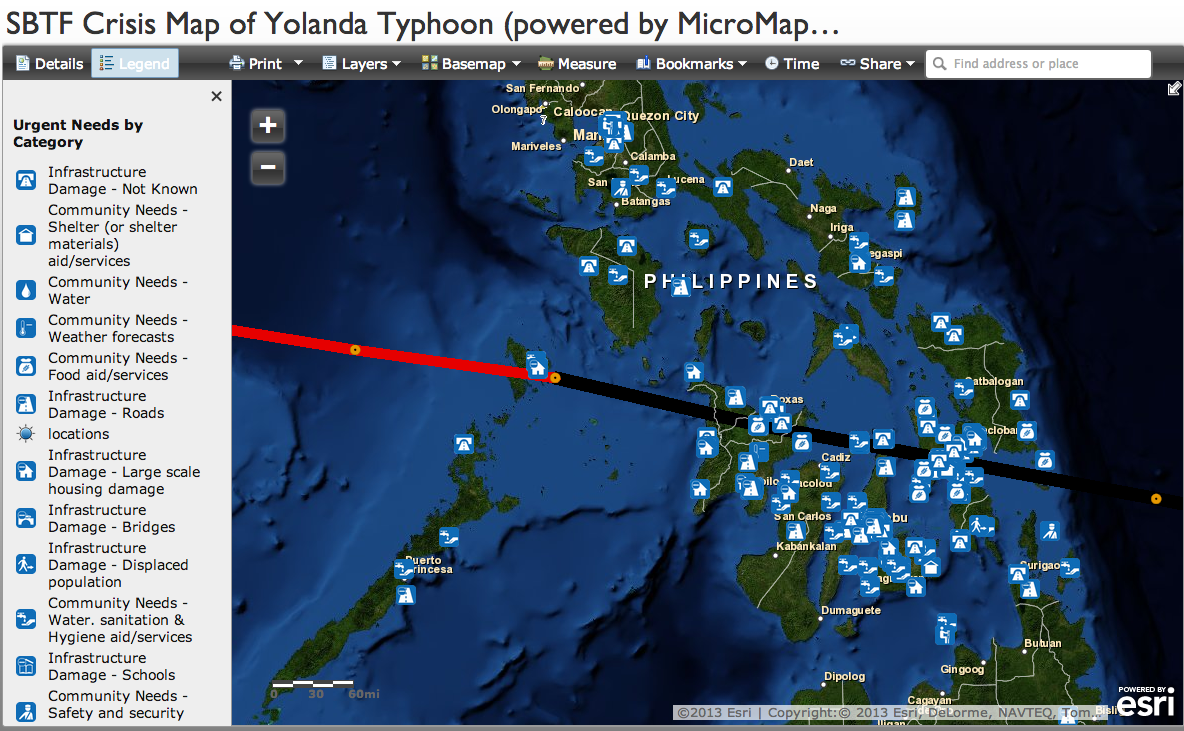
Crisis Map (Photo: Standby Task Force)
A new approach to disaster relief efforts is being mobilized as the Philippines continues to struggle with aid operations in the wake of Typhoon Haiyan. 

Developers worldwide have been called to participate in an emergency hackathon, to work on developing web apps (web applications) to help various humanitarian agencies and come up with solutions to disaster management.

As local and foreign aid agencies scramble to reach the hardest his areas, others provide assistance from behind their computers.  A new era of ‘digital humanitarianism’ is taking hold, as volunteers and humanitarians increasingly recognize the importance of technology in disaster management.

Geeklist, an online social network for developers and the technology community made the hackathon appeal to volunteer developers on the eve before the typhoon hit.  Out of 36 ideas, three projects have been launched. 

One such project is a Facebook appeals app, which the UK disasters emergency committee is now using to direct funds to UK charities that are working in the Philippines.

The other one is called Status PH, a real time mobile web app.  It allows people to find what they need nearby and kind of offer what they can give.  And the presidential communications and strategic planning team are using the third app, which helps the Philippine government track rescue cases.

Dan Cunningham, Director of the Corps of Developers for Geeklist in the UK, says that they’re working closely with organizations like UNOCHA, Doctors Without Borders and President Ninoy Aquino’s office, to further adapt what they’ve built to the organizations’ needs.

“The recovery and rebuilding process will take years really, and so these are long terms projects,” says Cunningham.

The recently published World Disasters Report 2013 highlighted technology’s potential in early crisis detection systems, and providing new platforms for training or raising awareness and funds.  Patrick Vinck, editor of the report, says that the integration of cameras, communication and GPS into the same tools just wasn’t possible even two years ago. 

“All the humanitarian [workers] are really thinking and looking at how do we make humanitarian action more efficient,” says Vinck.

But due to the lack of manpower and resources, aid agencies are not able to fully utilize the advantages of technology.  That’s where digital humanitarians come in, with their network of digital volunteers on standby as they wait to be ‘activated.’

“As far as possible, we try to get the projects based on challenges that are sent to us by the humanitarian organizations,” says Cunningham.

But a major problem that the technology and development communities recognize is the lack of technological infrastructure in some areas.

“We need to be mindful of communities that are not connected, that are isolated, that do not have access to the technology in this world, where we now start to think about technology as part of a response,” says Vinck.

Telecommunications and power was down for quite a while after the typhoon struck.  Cunningham notes that it was difficult to understand what people needed at the time, and they had to fall back to using very basic technology, like printouts of previously collected data.

Vinck suggests still maintaining traditional responses to disaster relief so communities won’t be left behind.
South Korean Mayor in London to Protest U.S. Naval Base


This was written on October 23, 2013, a day after the mayor visited London. The assignment was to produce a story based on an interview.  I interviewed the mayor through his translator. 

By Phoebe Yu

The mayor of Gangjeong Village in South Korea hopes to rally support in London against the building of a US naval base.

Mayor Kang Dong-Kyun is protesting the construction of a naval base in his village on Jeju Island, a volcanic island off the South Korean mainland in the southwest.  The island is a popular tourist destination with three of its volcanic sites declared as World Heritage Sites by UNESCO.

Construction for the naval base is well under way and will be completed by 2015, if things go as planned.  It will be able to hold up to 20 warships and two 150,000-ton cruise ships. 

Even if the base is almost 50 percent done, Kang says he will continue the fight against its construction.  Kang is against the adverse effects it will have on the environment and is concerned about the increasing militarization of the Korean peninsula.

“War destroys the environment and our livelihood,” he says. 

The South Korean government says that the base would help national security and would revitalize the small fishing and farming village. 

Kang contends that building a military base would not act as a deterrent from attacks, but would actually provoke it, and subsequently destroy nature and the people’s way of life.

“If they say it’s for national security against North Korea, why is it Jeju Island? So they should go to somewhere near North Korea to build it,” suggests Kang.  Therefore, he says that the base is meant for attack, not defense.

Kang suggests that both Koreas are caught up in power plays between superpowers US, Russia and China.

“We are still being used by their powers,” says Kang, referring to the North-South relations.  “If anything happens more in the future, smaller countries and places will be compromised.”

The US currently has military bases encircling the Pacific.  According to Global Research, a Canadian think tank, the base in Jeju will be a key port in the Asia-Pacific, as part of the US strategic ‘pivot’ into the region to contain China. 


Kang would like to farm his land freely, preserve it and pass it onto his descendants.  But he says he wouldn’t be able to do that if war breaks out.

Even if the decision to build a military base in Gangjeong had come from the South Korean government and not from the US, Kang says he would still oppose it because governments should be able to reutilize existing bases and increase technological capabilities there instead of building new ones.


Kang was detained for three months in 2011 for illegal assembly and obstruction of government business.  Before arriving in London, he visited Dublin and other parts of England and is set to go to Paris next.