Showing posts with label Stories/Portfolio. Show all posts

What is Human 2.0, the next evolution of humanity?

A video feature piece on the future of human evolution. I spoke to a self-proclaimed cyborg, prosthetic leg user, biohacker and expert in sociology about the relationship humans have with enhancement technology and body modification.

Producer, Editor, Scriptwriter and Voiceover: Phoebe Yu

Activists Call for Action at Don't Spy on Us Anti-Surveillance Campaign

It's been one year since Edward Snowden revealed the US scheme of global monitoring. Campaigners in London came together to discuss government surveillance and people's rights to privacy.


Reporter: Phoebe Yu
Camera and Editing: Phoebe Yu and Rosanne Roobeek
Script: Phoebe Yu

Women Walk for Water on Women's Day

Radio piece for International Women's Day. Care International launched a new campaign to raise awareness for women and girls who have no access to safe water.

Cue: How far do you have to walk to get water? A new campaign was launched to help women get access to safe water.

Listen on SoundCloud

Londoners React to Indian Elections Outcome

The recently elected Prime Minister Narendra Modi is a polarizing figure that faces both strong support and criticism. Londoners express their views on PM Modi and his Hindu nationalist Bharatiya Janata Party.


Reporter and Camera: Phoebe Yu
Editing: Phoebe Yu and Rosanne Roobeek
Script: Phoebe Yu

Google Cloud Platform Launches Aggressive Marketing Strategy

Radio piece on Google's new changes to its cloud computing service.

Cue: Google launches its new cloud computing strategy in a full-day summit in San Francisco with price reductions and new product features. Our reporter Phoebe Yu went to Google headquarters in London to get the story.

Future of Human Enhancement Technology

Radio piece on the future of human enhancement technology. Featuring an interview with Frank Swain from BBC Future's Hack My Hearing. Twitter feeds sound credit to the Listening Machine.

Cue: What would five hundred Twitter feeds sound like? A sound technician working on better hearing aids has found a way to transmit Twitter activity into audio. The idea of hearing invisible worlds was presented at a technology conference in London.

Listen on SoundCloud

Southeast England Continues to Battle Floods While Flood-Hacking Underway

Filmed in Staines on February 2014 during one of England's worst winter floods.


Reporter: Rosanne Roobeek
Camera and editing: Phoebe Yu and Rosanne Roobeek
Script: Phoebe Yu

Londoners Pressuring Sochi Olympic Sponsors

Filmed before the start of the Sochi Games, when London protesters participated in a global campaign to pressure Olympic sponsors to take action against Russia's anti-gay laws.


Reporter: Rosanne Roobeek
Camera and editing: Phoebe Yu and Rosanne Roobeek
Script: Phoebe Yu

British Party Leader Predicts UK Outcome in European Elections

Assignment for International Correspondent Specialism: write a story out of a press briefing as an international correspondent from your home country. 

Farage's speech to the Foreign Press Association (Video: Phoebe Yu) 
 
A small, populist, conservative party might oust the long-standing Conservative Party in the next European Parliament elections in May 2014.  It might seem like Canada in the late 1990s, when Preston Manning’s former Reform Party overtook the Progressive Conservatives as the official opposition.  But this time, the country in question is the United Kingdom, and the parties involved are the rising UK Independence Party (Ukip) and the Conservative Party.

Nigel Farage, leader of Ukip, predicted how well the UK’s three main parties will fare in the Euro elections during a press briefing to foreign journalists.

In a speech outlining the importance of this year’s Euro elections and the implications it will have for Britain, Farage suggested that the Liberal Democrats would fare the worst, the Conservatives would come in third, with Labour and Ukip competing to take the most seats.

Farage said the Lib Dems are in danger of facing a “wipe out,” with opinion poll ratings hovering from eight to nine percent.

And the Conservatives, who have never slipped past second place in UK general elections, could come out third in the Euro elections, suggested Farage.

“The prospects…would indicate that the Conservatives are going to come third in these European elections,” said Farage.

But the Ukip leader conceded that Labour is ahead of the polls, though not without questioning the accuracy of the polls in question. 

Farage sees a Labour victory or loss to be a reflection of the population’s views for a referendum on Britain’s EU membership.  Ukip aims to withdraw from the European Union, and will call for a referendum on this issue should it gain enough support.

“If Labour wins, that will be seen to be an endorsement of the Miliband position, mainly, that they are not going to match the Conservative promise of a referendum.  But if Labour don’t win, and if Ukip are able to overhaul Labour, then I think there will be enormous demand for the Labour party to match the promise [of a referendum].”

The latest EU elections poll by ICM/YouGov conducted on 10 February 2014, has Labour leading at 32%, Ukip at 26%, the Conservatives at 23% and the Lib Dems trailing at 9%.

Lib Dem leader, Nick Clegg, has called for a live debate with Farage on the EU question, after the Lib Dem president warned that they're in for the "fight of our lives."  Farage accepted the challenge, suggesting it take place in April or May.

Last year, Farage visited Canada to meet with Manning and ask for his advice on how an initially small protest party surged to national prominence.  The Reform Party has since been disbanded to merge with the political right.

 Farage's speech to a Canadian audience in 2013 (Credit: Ukip Media)


English Defence League Clashes in Slough

Filmed on February 1, 2014 during an English Defence League (EDL) protest against a Muslim community centre to be built in Slough.


Reporter: Phoebe Yu
Camera: Rosanne Roobeek
Editing and script: Phoebe Yu and Rosanne Roobeek

Digital Volunteers ‘Activated’ in Typhoon Haiyan Relief


This online piece was written on November 19, 2013, two weeks after Typhoon Haiyan struck, when aid relief was underway.  This piece would be most appropriate for news outlets’ technology section, or even the Guardian’s development section. 

By Phoebe Yu

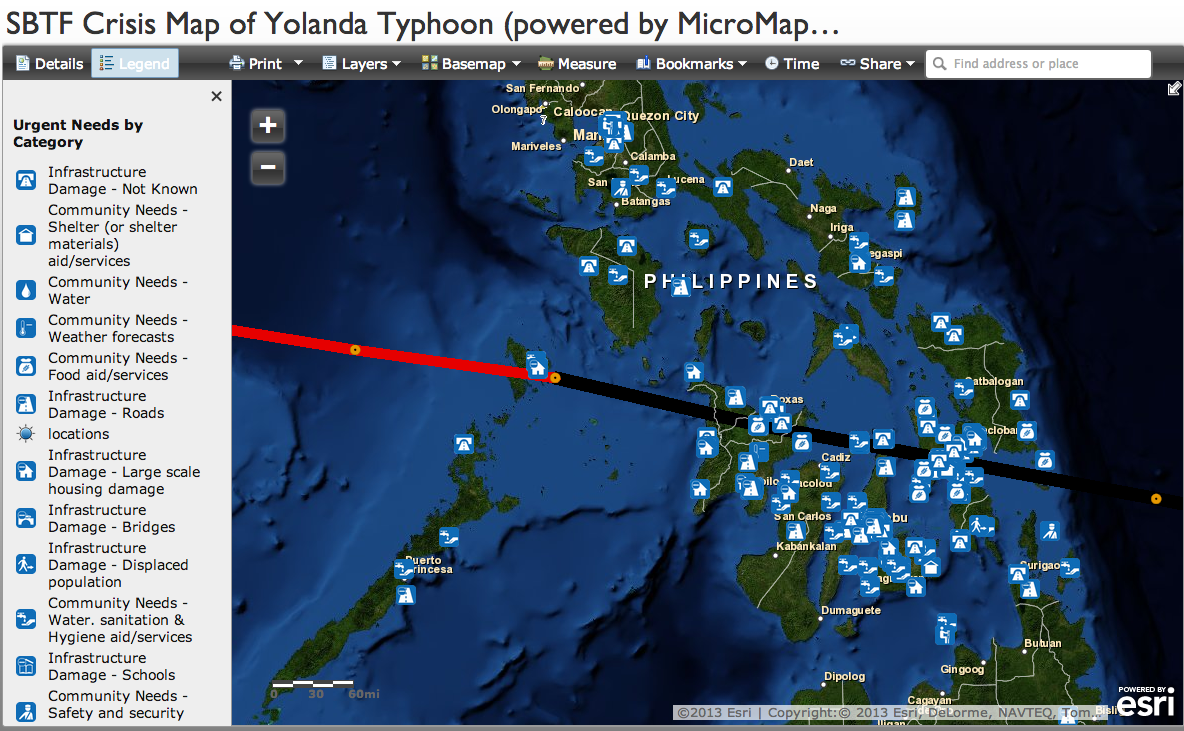
Crisis Map (Photo: Standby Task Force)
A new approach to disaster relief efforts is being mobilized as the Philippines continues to struggle with aid operations in the wake of Typhoon Haiyan. 

Developers worldwide have been called to participate in an emergency hackathon, to work on developing web apps (web applications) to help various humanitarian agencies and come up with solutions to disaster management.

As local and foreign aid agencies scramble to reach the hardest his areas, others provide assistance from behind their computers.  A new era of ‘digital humanitarianism’ is taking hold, as volunteers and humanitarians increasingly recognize the importance of technology in disaster management.

Geeklist, an online social network for developers and the technology community made the hackathon appeal to volunteer developers on the eve before the typhoon hit.  Out of 36 ideas, three projects have been launched. 

One such project is a Facebook appeals app, which the UK disasters emergency committee is now using to direct funds to UK charities that are working in the Philippines.

The other one is called Status PH, a real time mobile web app.  It allows people to find what they need nearby and kind of offer what they can give.  And the presidential communications and strategic planning team are using the third app, which helps the Philippine government track rescue cases.

Dan Cunningham, Director of the Corps of Developers for Geeklist in the UK, says that they’re working closely with organizations like UNOCHA, Doctors Without Borders and President Ninoy Aquino’s office, to further adapt what they’ve built to the organizations’ needs.

“The recovery and rebuilding process will take years really, and so these are long terms projects,” says Cunningham.

The recently published World Disasters Report 2013 highlighted technology’s potential in early crisis detection systems, and providing new platforms for training or raising awareness and funds.  Patrick Vinck, editor of the report, says that the integration of cameras, communication and GPS into the same tools just wasn’t possible even two years ago. 

“All the humanitarian [workers] are really thinking and looking at how do we make humanitarian action more efficient,” says Vinck.

But due to the lack of manpower and resources, aid agencies are not able to fully utilize the advantages of technology.  That’s where digital humanitarians come in, with their network of digital volunteers on standby as they wait to be ‘activated.’

“As far as possible, we try to get the projects based on challenges that are sent to us by the humanitarian organizations,” says Cunningham.

But a major problem that the technology and development communities recognize is the lack of technological infrastructure in some areas.

“We need to be mindful of communities that are not connected, that are isolated, that do not have access to the technology in this world, where we now start to think about technology as part of a response,” says Vinck.

Telecommunications and power was down for quite a while after the typhoon struck.  Cunningham notes that it was difficult to understand what people needed at the time, and they had to fall back to using very basic technology, like printouts of previously collected data.

Vinck suggests still maintaining traditional responses to disaster relief so communities won’t be left behind.

South Korean Mayor in London to Protest U.S. Naval Base


This was written on October 23, 2013, a day after the mayor visited London. The assignment was to produce a story based on an interview.  I interviewed the mayor through his translator. 

By Phoebe Yu

The mayor of Gangjeong Village in South Korea hopes to rally support in London against the building of a US naval base.

Mayor Kang Dong-Kyun is protesting the construction of a naval base in his village on Jeju Island, a volcanic island off the South Korean mainland in the southwest.  The island is a popular tourist destination with three of its volcanic sites declared as World Heritage Sites by UNESCO.

Construction for the naval base is well under way and will be completed by 2015, if things go as planned.  It will be able to hold up to 20 warships and two 150,000-ton cruise ships. 

Even if the base is almost 50 percent done, Kang says he will continue the fight against its construction.  Kang is against the adverse effects it will have on the environment and is concerned about the increasing militarization of the Korean peninsula.

“War destroys the environment and our livelihood,” he says. 

The South Korean government says that the base would help national security and would revitalize the small fishing and farming village. 

Kang contends that building a military base would not act as a deterrent from attacks, but would actually provoke it, and subsequently destroy nature and the people’s way of life.

“If they say it’s for national security against North Korea, why is it Jeju Island? So they should go to somewhere near North Korea to build it,” suggests Kang.  Therefore, he says that the base is meant for attack, not defense.

Kang suggests that both Koreas are caught up in power plays between superpowers US, Russia and China.

“We are still being used by their powers,” says Kang, referring to the North-South relations.  “If anything happens more in the future, smaller countries and places will be compromised.”

The US currently has military bases encircling the Pacific.  According to Global Research, a Canadian think tank, the base in Jeju will be a key port in the Asia-Pacific, as part of the US strategic ‘pivot’ into the region to contain China. 


Kang would like to farm his land freely, preserve it and pass it onto his descendants.  But he says he wouldn’t be able to do that if war breaks out.

Even if the decision to build a military base in Gangjeong had come from the South Korean government and not from the US, Kang says he would still oppose it because governments should be able to reutilize existing bases and increase technological capabilities there instead of building new ones.


Kang was detained for three months in 2011 for illegal assembly and obstruction of government business.  Before arriving in London, he visited Dublin and other parts of England and is set to go to Paris next.

BC Offshore Schools Provide Canadian Curriculum to Far-Flung Students

Text by: Phoebe Yu
Edited by: Monique Kroeger, Elana Baxter
Published: August 27, 2013, The Source

Students in B.C. are gearing up for school. Other students in countries like China and Korea are also preparing to head back to school to study a curriculum identical to that of B.C. students, but without the expense or inconvenience of travelling to Canada.
Offshore School Programs offer students abroad the opportunity to study under a B.C. curriculum with English as the language of instruction. There are currently 37 certified B.C. offshore schools in China, Egypt, Korea, Thailand, Qatar and Colombia. The B.C. Ministry of Education states that the offshore schools program helps build strong international relationships that help develop cultural, economic and research opportunities.
Home advantage, international insight
For Chris Ge, being educated at a B.C. offshore school helped him better understand both Western and Chinese culture. He was one of the first students to graduate from Maple Leaf International School in 1999 in Dalian, China, where he spent four years at boarding school. His parents originally sent him there so he could learn English, and then move abroad for university. Many of his classmates, he suggests, went to the school for similar reasons.
Larry Simpson, principal of BIS Canada in Seongnam, South Korea, says that their school started so families wouldn’t have to be separated. He adds that many South Korean students are sent overseas to receive an English education, which, according to research by Leah Petersen and Jeeson Park-Saltzmanon, can wreak havoc on a family and raise challenges like discrimination, cultural conflict, and an unclear sense of identity.
“[Here] the family wouldn’t have to be broken up and most students would remain Korean and they would have the support of their family and culture as you’re dealing with this very strange curriculum,” says Simpson.
George Watson, superintendent of Maple Leaf Educational Systems, says that they offer students an opportunity to study and graduate from a B.C. curriculum and most of their graduates enroll in Canadian universities.
“This is a direct economic boost to the provincial economy and has many long term advantages as well,” Watson says.
Life at a B.C. Offshore School
At BIS Canada, students are expected to speak English once they enter the school gates, and there’s more of an emphasis toward inquiry-based learning.
Similarly, Ge and his classmates had to speak English during classes, but would revert to speaking Mandarin during their free time or at the dormitories. He recalls that the transition was difficult in the beginning, but he adjusted quickly after his first year at Maple Leaf.
“We just spend more time studying English, while we’re studying the academic coursework,” he says.
Simpson says that children are quite flexible.
“We often tell our parents, your children understand this system much better than you. They’re able to bridge the gap better than you can, and much better than we can as well,” he says.
At Maple Leaf, Watson says students are not immersed in Canadian culture, but over time develop an understanding of the Western education system and have confidence to think for themselves.
Life after B.C. offshore school
At first, Ge didn’t feel he was immersed in Canadian culture while he was at Maple Leaf. But when he first came to Canada for university, he realized that he had an advantage compared to other Chinese students who had just come to Canada and hadn’t gone to an international school.
“I think they would have a leg up on their peers,” says Simpson, when talking about BIS students. He believes his students remain rooted in Korean culture, even though they’ve received a Western education. That experience is different from ‘in-between’ kids who have spent a number of years abroad. In their mind, Simpson says, they’re Canadian, yet their parents are still deeply rooted in Korea.
Ge doesn’t have the confusion in-between kids do. He still feels Chinese first, but also understands the Western culture. He’s able to navigate between cultures with ease. When he worked for Dell in China, he was able to mediate problems in his department and communicate with both his Chinese and Western colleagues.
“It never happened to me, the question whether they think me more Chinese or more Western,” Ge recounts. “When I speak to Chinese people, like my Chinese friends…they thought of me as a Chinese. But when I deal with my boss, with foreigners, I do speak their way.”
In Korea, Simpson explains that big organizations like Samsung, Hyundai and LG look for people who have a foreign education because they seem to have a bit more creativity. So, he believes the real advantage students receive is a lesson in how to become global citizens.
When he first started studying at Maple Leaf, Ge thought that he was merely learning English at the school.
“But now, I do feel that the culture is the most important thing I learned from being in an international school,” he says.
For Ge, his high school years shaped his value system and allowed him to understand Western culture while retaining his Chinese identity.
Queer Film Festival Celebrates 25 Years

Text by: Phoebe Yu
Edited by: Monique Kroeger, Elana Baxter
Published: August 6, 2013, The Source

Queer stories come out on screen from August 15–25, as the annual Vancouver Queer Film Festival celebrates LGBTQ films and filmmakers in various venues around town. This year marks a milestone in the festival’s history, as it celebrates its 25th anniversary.
Shana Myara, director of festival programming, says that this year’s festivities are a chance to look back and see how our lives and the community has changed, as well as an opportunity for the community to think about what they want the future to look like.
The community will largely shape the direction the festival takes moving forward. As part of the 25th anniversary focus, the festival will host a PechaKucha event, called “Who are we, Cinema?” Invited speakers will talk about what role cinema has played in queer lives and what it can continue to say in the future. Myara notes that special guest, Adam Goldman, creator of popular online dramatic series, The Outs, will arrive from Brooklyn. Myara describes Goldman as part of the new generation of artists that bypass traditional distribution sources, and instead bring their work directly to the audience.
Focus on India
The VQFF is doing something else different this year with their Focus on India series. The focus on India was largely inspired by Rituparno Ghosh’s film, Chitrangada: The Crowning Wish, which is the centrepiece gala film. The film explores a particular Indian law that prohibits same-sex couples from adopting a child. Ghosh was slated to be this year’s special guest but had passed away last May from cardiac arrest.
Another notable Indian film is documentary In-between Days, by Sankhajit Biswas. The friendship of two best friends is tested as they compete for a senior position in an organization for HIV-prevention outreach. Biswas follows Chiranjit and Bubai around the streets of Kolkata as they navigate their way through the sex trade, companionship and survival.
In an email interview, Biswas told The Source that many documentaries about the LGBT community might come across as ‘preachy.’ Instead, he wanted his film to be more of an observational study.
“This way, I wanted to show that they are ‘normal’ human beings and undergo similar life experiences as we do. Let’s not treat them as ‘different.’ That’s humiliation,” he says.
Although the situation of transgendered communities in Vancouver and India are very different, Biswas points out it’s important to understand and sympathize with communities in other parts of the world. In India’s case, transgender boys are particularly at risk because Indian society believes that males are less affected by sexual exploitation than girls, so they are not protected.
Biswas believes that Vancouver audiences will be able to emotionally relate to the characters and also see a “slice of life” from a very different country.
“I think these crisis situations in the lives of Bubai and Chiranjit are something that binds an audience to a film. It is local and universal at the same time,” he says.
Other events to watch
There will also be a selection of international dramas like Magnificent Presence (Italy) andBwakaw (Philippines).
Myara suggests audiences check out other events like another 25th anniversary event focus, called “Lot in Sodom & Vintage Queer Porn.” They will be showcasing vintage queer silent films from the 1920s and 1930s, accompanied with a live musical score, courtesy of local musicians. Myara mentions that some of the films were very racy, of the pornographic variety, but some of them were also made for popular media.
Looking back on the past 25 years, Myara believes the festival is an integral part of strengthening Vancouver’s queer communities. She indicates that popular media may focus on heterosexual love stories most of the time.
“But for this 11 days, we’re the stars of the show. Our gaze and sensibility rules and we get to talk about issues that are very important to our community,” says Myara.
Myara hopes that the festival provokes thought within the community and brings people together for a stellar collection of films.

Navigating the Culture of Personal Space

Text by: Phoebe Yu
Edited by: Monique Kroeger, Elana Baxter
Published: July 9, 2013, The Source

Learning how to communicate across cultures involves more than just using your voice – non-verbal cues are just as important. Personal space is one of the many non-verbal nuances in intercultural communication that can be difficult to traverse.
According to anthropologist Edward T. Hall, an archetypal American male stands 18 to 20 inches away when talking to another man and slightly farther than that when talking to a woman. In contrast, Hall notes that in many parts of Latin America and the Middle East, people can only talk comfortably at distances that would have an almost sexual undertone in North America.
“If you are a Latin American, talking to a North American at the distance he insists on maintaining it’s like trying to talk across a room,” Hall writes.
Personal space and culture
Joenita Paulrajan, program manager of the University of British Columbia’s Centre for Intercultural Communication, agrees that culture plays a major role in our everyday lives and that personal space is a part of everyday communication.
Paulrajan suggests that how we respond to each other’s personal space could be an indication of how well we know the other person.
“How we maintain and respect each others’ personal space does influence our relationship, whether it’s at work or at home,” she says.
For Monica King, who grew up in Vancouver and is currently teaching English in South Korea, her experiences with navigating personal space across different cultures consisted of trial and error until she and her co-workers achieved a balance that made everyone comfortable.
King says that in Korea, respect for elders is extremely important and there is also a greater separation between the genders. When greeting one another, there is no physical contact. Instead, Koreans greet each other by bowing.
But since King is originally from the Philippines, her students were initially confused about how to address her because she was a foreigner, but at the same time looked Asian and was not that much older than they were. Some students tried to be respectful and bowed to her, while others tried to be more westernized and shook her hand, or even gave her an outright hug.
By contrast, King says that the Filipino culture is very “huggy” and often drops the formal respect directed towards strangers, because no one is ever really a complete stranger.
“I always find out later that we’re related somehow, or they know someone I know and we’re suddenly friends,” says King.
King describes the other Canadians she’s met in Korea as “huggers” as well, and it’s easy to see why people would think Canadians are friendly. But, she notes that even though Canadians are friendly, they are smart enough to know who to keep as a friend, and that is why it might be hard to get past being ‘casual’ friends to becoming ‘real’ friends.
“I think there’s many ways to think about it – you can say it’s a gender difference, you can say it’s a generation difference, [or] culture difference,” King says.
Individual perceptions of personal space
Paulrajan concurs that culture has to be perceived holistically and that we need to focus on individuals and how they interact rather than generalizing about broad cultural differences.
“When we look at culture, it’s not just your ethnic culture, but it’s also very broad…it could be age, it could be gender,” she says.
“I think we need to create a space for folks to come and dialogue with each other and find out how best to work with each other.”
According to Paulrajan, there are many levels to people’s personal space, and it doesn’t just relate to physical space and comfort but to how people communicate and interact. How people give or react to personal space affects relationships, something Paulrajan suggests should not be overlooked just because it’s not easily identifiable or understood.

Nordic Melodies and North American Roots Merge on Stage

Text by: Phoebe Yu
Edited by: Monique Kroeger, Elana Baxter
Published: July 9, 2013, The Source

One fateful night changed Lena Anderssen’s life and set her on the path of a musical career, leading her to take the stage at the upcoming Vancouver Folk Music Festival this July.
It happened nine years ago. Anderssen was working at a café in the Faroe Islands, singing to herself while she was closing shop, when a drummer suddenly appeared. She hadn’t realized there were any customers left behind. He had just come up the stairs from the washroom below when he heard Anderssen sing. It was then that the drummer asked her to be the lead singer in a cover band he was starting.
Not long after, Anderssen and Niclas Johannesen, another band member, started writing their own original compositions. They typically perform as a duo on stage and are partners in songwriting. Anderssen’s music has been described as “hauntingly honest,” and, in her own view, is a mixture of folk and pop music.
Anderssen was born in the Faroe Islands and moved to Vancouver with her family when she was three years old. She would wind up moving around and living in different parts of Canada, before finally settling in the Faroe Islands semi-permanently.
“I feel that I have roots on both sides of the world,” she says.
Anderssen suspects that her cultural background has been reflected in her music. Even though she speaks Faroese and Danish, she sings in English, which reflects her North American culture. But she suggests that her music is also tempered with the flavours and experiences she’s gathered from the other side of the world. Some of her songs have a strong Nordic melodic structure.
Generally, Nordic melodic structure, she explains, is vertical – it jumps from major to minor scales. North American roots are more horizontal and rich in storytelling.
Anderssen mentions that there’s a big music scene in the Faroes that may have something to do with the ocean surrounding the little island, while the big world outside waits.
“It creates this sort of longing, and I think it’s that longing that also inspires much music,” she says.
This same type of longing and restlessness can also be heard in Anderssen’s music. But having had no formal training in writing melodies, she credits her partner, Johannesen, with introducing her to the process.
“The way he sort of introduced songwriting to me, he made it so un-strange and un-mystical that I didn’t think that you had to study songwriting for a bunch of years in order to write a song,” she says.
She notes that Johannesen comes from a melodic background, inspired by groups like the Beatles, while she comes from a North American background.
“I think the two [styles] merge quite nicely. You don’t necessarily think about a style and then become the style, you just are it,” she says.
Anderssen is looking forward to coming back to Vancouver for the Folk Music Festival, where she will be performing with Johannesen, along with one other percussionist.
“It’s going to be an intimate and stripped down set where I just let the songs and the vocals speak for themselves,” she explains.
After the festival, Anderssen and Johannesen will be recording their next album. She reveals that a lot of the lyrical content for the new material will be about her childhood, so she needs to come back and revisit the places where she grew up.
Asked where she feels most at home, Anderssen reveals that her nomadic life has changed what homes to her.
“I’ve just made this really great home in my head and that’s where it stays because I take myself with me wherever I go. I don’t really feel any more at home here or there or anywhere,” she says.
The Folk Music Festival is happening July 19–21 at Jericho Beach Park. See website for full schedule and ticket prices at http://www.thefestival.bc.ca